Crushing and Grinding Experiment of Cadmium
Updated: Aug 15
Introduction
Cadmium(Cd) is a metal element. It is found with zinc mostly in nature and produced as a secondary product. Some of the properties are in the below table.

Note: Adapted from Faroon, O., Ashizawa, A., Wright, S. et al. (2012, September). Table 4–2, Physical and Chemical Properties of Cadmium and Compounds
On average, it is found in the Earth’s crust in 0.2 g/tonne proportions. In addition, it is used to prevent rusting and make the control sticks in the nuclear reactors (Wikipedia, 2021).
About the Experiment
As for the experiment, the main objective is reducing the cadmium sample’s size and screening to prepare necessary processes. Required equipment and information are given in table.

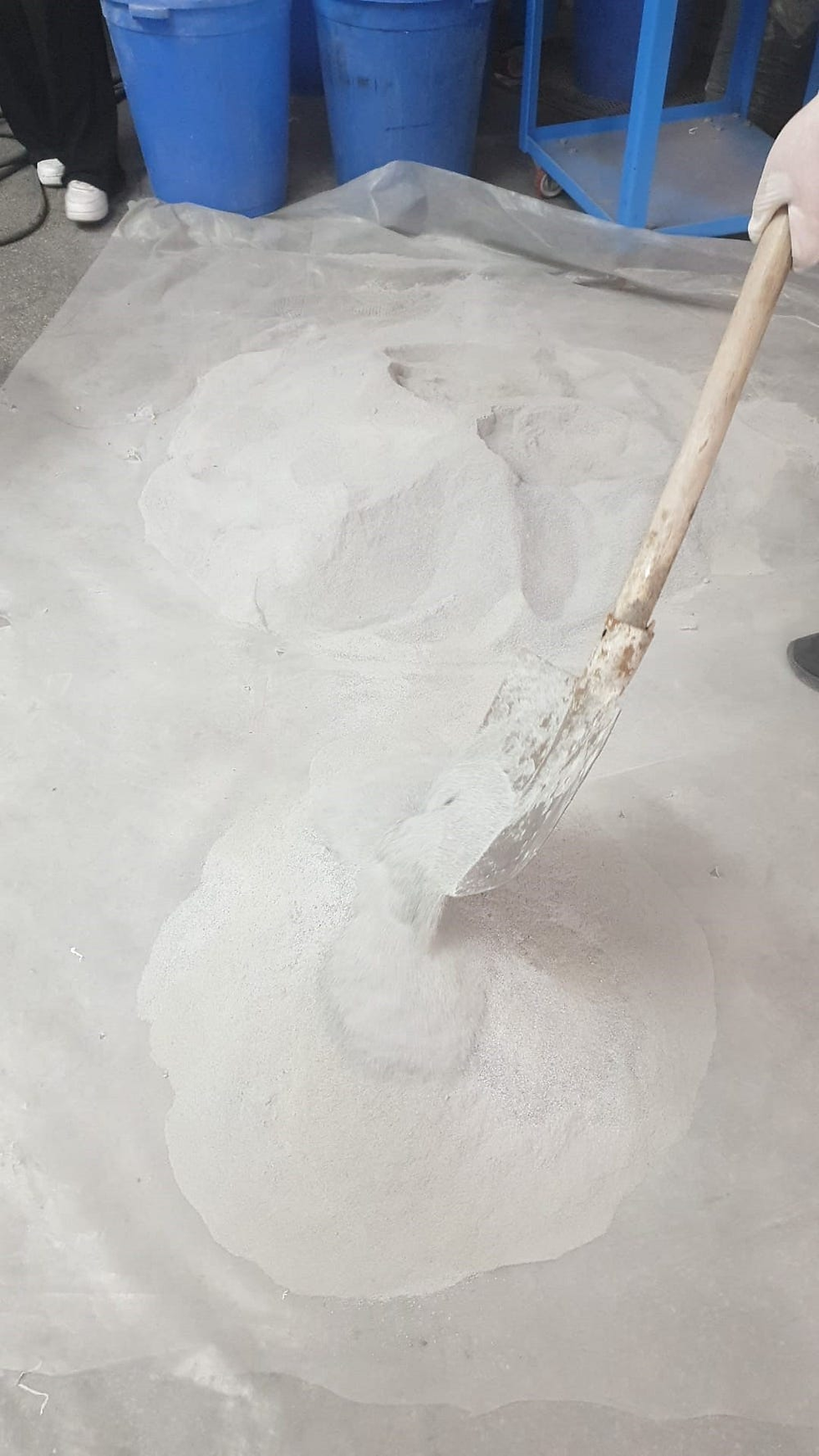
Firstly, the sample is blended with a shovel to ensure homogeneity. Then, by cone and quartering, the sample is split into four parts, and two diagonal parts are taken, corresponding to 90 kg.
After preparing the sample for crushing, the crushing stage has begun with the cone crusher. The -1000 microns sieve is placed in the Russell Compact Sieve Machine. The sieving procedure is started, and the oversize material is fed into the roll crusher. Hence, a closed-circuit crushing is provided.


After all the particles are crushed to -1000 microns, all the sample is taken onto a tarpaulin and blended with a shovel. Cone and quartering method is used again. 45 kg is taken for the Chute Riffler. The rest is kept for the post-processes as a backup. The taken sample is split as 1 kg with the Chute Riffler and packed with small sample bags.